

I still remember the first time I baked a French Croissant from scratch in my little kitchen. It was a chilly weekend morning, and my family gathered around the table, excited to try something new. The flaky pastry layers made from laminated dough filled the air with the comforting aroma of buttery croissants. Watching my kids’ faces light up as they took their first bite made me realize why this breakfast pastry deserved a special place in my collection. Since then, French Croissant has become a family favorite that uncomplicatedly brings joy to our mornings.
What I love most about this French Croissant recipe is how it fits perfectly into everyday home cooking. You don’t have to be a professional baker to get it right. The ingredients are simple, and the process is clear enough to follow without stress. When life gets busy and the weekdays blur, having a reliable recipe like this French Croissant gives me confidence that a delicious breakfast or snack is never far away. Plus, the buttery croissant layers always impress guests and family alike, proving that you don’t need fancy bakeries to enjoy quality Viennoiserie at home.
If you’ve been searching for a dependable, taste-tested French Croissant recipe that you can make with ingredients in your pantry, you’re in the right place. This recipe delivers flaky pastry with a tender crumb that’s just right every time. And it pairs wonderfully with simple spreads or fresh coffee. I’m so happy to share it with you and hope it becomes your go-to recipe too. If you love this, your family might also enjoy a comforting French Butter Cake or a crowd-pleasing French Toast Bake for sweeter mornings.
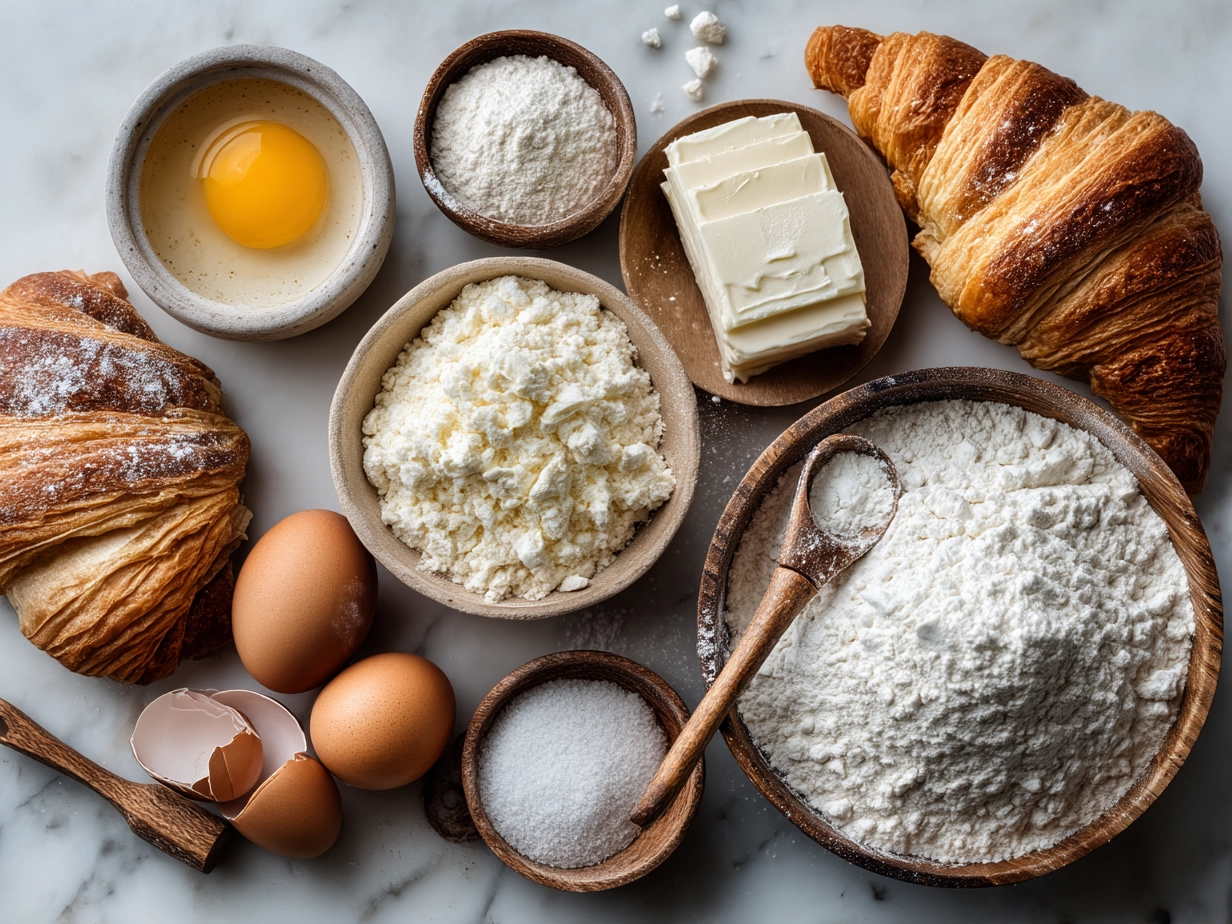
What You’ll Need:
3 ½ cups (440g) all-purpose flour, plus extra for dusting
No worries if you don’t have all-purpose flour—I’ve sometimes used bread flour for extra chewiness in my French Croissant dough. You’ll find this in the regular grocery aisle, usually in the baking section.
1 cup (240ml) whole milk, warm
You can substitute with 2% milk if needed, but whole milk gives the best tender crumb in your French Croissant.
1/4 cup (50g) granulated sugar
This adds just the right hint of sweetness without overwhelming the buttery croissant layers.
2 1/4 tsp (7g) active dry yeast
Instant yeast works fine too—just mix it a little differently as per the package.
1 1/4 tsp salt
Essential to bring balance to the flavors in your French Croissant.
1 ¼ cups (280g) unsalted butter, cold
This is the heart of your butter croissant, so quality butter makes a difference. If you can snag European-style butter, it melts nicer and gives an extra buttery croissant flavor.
1 large egg
For the egg wash that gives your French Croissant that beautiful golden finish.
Shopping tips: Butter and flour are the stars here. Look for butter with a high-fat content for the best laminated dough. This French Croissant keeps costs reasonable because these ingredients are staples.
Prep shortcut: I like to prep my butter slab ahead of time by placing it between parchment and pounding it to a flat square in the fridge. Also, give your dough and butter time to chill—it makes handling the laminated dough much easier.
Storage advice: If you have extra French Croissants, wrap them well and freeze. Reheat gently in the oven to bring back that flaky pastry texture instead of a soggy microwave warm-up.
Here’s the one little change I make to my French Croissant that makes all the difference: giving the dough time to rest in the fridge overnight after the final fold. It helps the layers set and improves the flaky pastry texture.
Let’s Make It Together:
1. Activate the yeast: In a small bowl, mix warm milk, sugar, and yeast. Let it sit 5-7 minutes until frothy. This means your yeast is alive and ready to work in your French Croissant dough.
2. Make the dough: In a large bowl, combine flour and salt. Add the frothy yeast mixture and stir to form a shaggy dough. Knead gently by hand or with a stand mixer fitted with a dough hook for about 5 minutes until smooth. Don’t worry if your French Croissant dough seems a little sticky at first; a light dusting of flour can help.
3. First chill: Shape the dough into a ball, cover with plastic wrap, and refrigerate for at least 1 hour. This resting time firms up the dough, making the laminated dough process easier.
4. Prepare the butter block: Place your cold butter between parchment paper and pound it with a rolling pin into a 7-inch square. Chill in the fridge if it gets too soft.
5. Laminate the dough: Roll the dough out into a 10 x 10-inch square on a lightly floured surface. Place the butter block diagonally in the center. Fold the dough edges over the butter like a letter, sealing it completely.
6. Roll and fold: Roll the dough into a long rectangle about 8 x 24 inches. Fold it into thirds, like folding a letter. This is your first “turn” for the laminated dough. Wrap in plastic and chill for 30 minutes. Repeat rolling, folding, and chilling two more times for three turns total.
7. Shape your croissants: Roll the dough into a 12 x 24-inch rectangle. Cut triangles with a base about 4 inches wide. Roll each triangle from base to tip, tightening slightly to get those classic croissant curves.
8. Proof: Place the shaped French Croissant on parchment-lined baking sheets. Cover with a light kitchen towel or plastic wrap sprayed with cooking spray. Let them rise at room temperature for 1-2 hours until doubled and jiggly.
9. Bake: Heat your oven to 400°F (200°C). Brush your croissants with beaten egg for that glossy smash of golden color. Bake for 15-20 minutes until puffed and deep golden brown. Your kitchen will smell amazing when your French Croissant is ready.
10. Cool and enjoy: Let the croissants cool at least 10 minutes before digging in. This final rest helps the buttery croissant layers fully set.
From start to finish, this French Croissant takes about 4 hours spread over two days if you include chilling and proofing time. The good news is you can multitask during those waits—chop fruit for a side, or pour yourself a second cup of coffee. This is where I used to rush my French Croissant—taking your time here really pays off in flaky pastry layers and rich buttery flavor.
Don’t worry if your first French Croissant looks imperfect. Each fold teaches you more about how laminated dough behaves. And if you want to see the method in action or get more tips on making buttery, flaky homemade croissants, check out this helpful tutorial.

How to Serve & Enjoy:
This French Croissant is a versatile crowd-pleaser. My favorite way to serve it is alongside fresh berry jam and a strong cup of coffee for a simple breakfast pastry treat. It pairs wonderfully with creamy scrambled eggs for a heartier brunch or with a fresh green salad for a light lunch.
For cozy breakfasts, consider serving your French Croissant with seasonal fruit like sliced peaches in summer or poached pears in fall. The buttery croissant complements fruit’s natural sweetness perfectly.
When I host, these croissants are always a hit with friends and family. They look beautiful when arranged on a platter with a small bowl of butter and honey for spreading. Simple presentation makes the flaky pastry look irresistible.
Leftover French Croissants don’t have to be dull either. Toast them lightly and add melted cheese or ham for an easy croissant sandwich. They also work well in recipes like a French Toast Bake—if you love this, check out my favorite French Toast Bake recipe or even a Pumpkin Spice French Toast Casserole for fall mornings (recipe here).
I’ve also played around with seasonal variations, like brushing the croissants with cinnamon sugar before baking or wrapping them with ham and swiss cheese for savory Viennoiserie-inspired treats.
Your Questions Answered:
Can I make this French Croissant ahead of time?
Absolutely. You can shape and proof your croissants, then freeze them on the baking sheet. When ready, thaw overnight in the fridge and bake fresh the next morning. This is a great way to have buttery croissants on demand.
What’s a good substitute for butter in this French Croissant?
Butter is really key for that classic flaky pastry. If you’re out, you could try margarine but expect a less rich flavor. European-style butter works best, giving the best balance in laminated dough.
How do I adjust this French Croissant for fewer people?
You can halve or even quarter the dough recipe easily. Keep the same proportions and just scale the yeast and flour amounts. Baking smaller batches helps avoid waste.
My French Croissant dough is sticky and hard to work with. What should I do?
Try chilling the dough longer between turns. Laminated dough can get sticky if the butter softens too much. Also, lightly flour your surface and keep your hands cool.
Can I add chocolate or almond filling to this French Croissant?
Yes! Adding a square of chocolate near the base before rolling makes for a delightful pain au chocolat. Almond croissants can be made by brushing with almond paste after baking and dusting with powdered sugar.
How important is resting the dough overnight?
It’s a game-changer. Resting lets the gluten relax and helps develop those buttery croissant layers. If short on time, a few hours of chilling still helps.
Are croissants better in Vienna or Paris?
A fun question in croissant circles! Check out this discussion on croissant debates—I appreciate croissants from various Viennoiserie traditions, but homemade French Croissant wins in my kitchen every time.
If you want to see more ideas and inspiration from France’s best bakeries, Emily has a great roundup of Viennoiserie she tried in Emily In France Exclusive The 14 Best Viennoiseries I Tried on My …. It’s a nice way to get inspired after making your own.
Final Thoughts:
This French Croissant holds a special place in my recipe collection for a few reasons. It’s dependable, straightforward, and brings the best buttery croissant experience right to my home kitchen. My Best French Croissant Tips:
Take your time with the laminated dough turns—patience here makes all the difference.
Use cold butter and chill often to keep the dough workable.
Don’t skip the egg wash—it gives that golden, flaky pastry finish everyone loves.
I’ve tested several variations, from traditional plain croissants to chocolate-filled versions and savory ham and cheese ones. The plain, flaky French Croissant is by far the most requested at my house, especially for weekend breakfasts and holiday brunches.
I hope you’ll enjoy making this French Croissant as much as I do. It’s a recipe you can tweak to your taste and confidence level. Most importantly, I hope it fills your kitchen with warmth and your table with smiles. Dive in, fellow home cooks. Happy baking!
French Croissant

A classic French croissant is a flaky, buttery pastry with delicate layers, perfect for breakfast or a delightful snack.
- Prep Time: 30 minutes
- Cook Time: 20 minutes
- Total Time: 3 hours 20 minutes
- Yield: 12 croissants
- Category: Breakfast
- Method: Baked
- Cuisine: French
Ingredients
- 4 cups all-purpose flour
- 1/2 cup warm milk
- 1/2 cup warm water
- 1/4 cup granulated sugar
- 2 1/4 tsp active dry yeast
- 1 tsp salt
- 1 cup unsalted butter, cold
- 1 egg (for egg wash)
Instructions
- In a bowl, combine warm milk, warm water, sugar, and yeast. Let it sit for 5-10 minutes until frothy.
- In a large mixing bowl, whisk together flour and salt. Add the yeast mixture and mix until a dough forms.
- Knead the dough on a floured surface for about 5-7 minutes until smooth. Place in a greased bowl, cover, and let it rise for 1-2 hours until doubled in size.
- Roll out the dough into a large rectangle on a floured surface.
- Place the cold butter between two sheets of parchment paper and pound it with a rolling pin into a flat square about 1/2 inch thick.
- Place the butter square onto one half of the dough, fold the other half over it, and seal the edges.
- Roll the dough out again into a rectangle, then fold it into thirds like a letter. Wrap and refrigerate for 30 minutes.
- Repeat the rolling and folding process two more times, chilling for 30 minutes between each turn.
- After the final turn, roll the dough out into a large rectangle about 1/4 inch thick.
- Cut the dough into triangles, roll each triangle from the base to the tip to form croissants.
- Place croissants on a baking sheet lined with parchment paper, cover, and let rise for 1-2 hours until puffy.
- Preheat oven to 400°F (200°C). Brush croissants with beaten egg.
- Bake for 15-20 minutes until golden brown and flaky. Cool slightly before serving.
Notes
For extra flavor, spread a thin layer of chocolate or almond paste inside before rolling the croissants.